
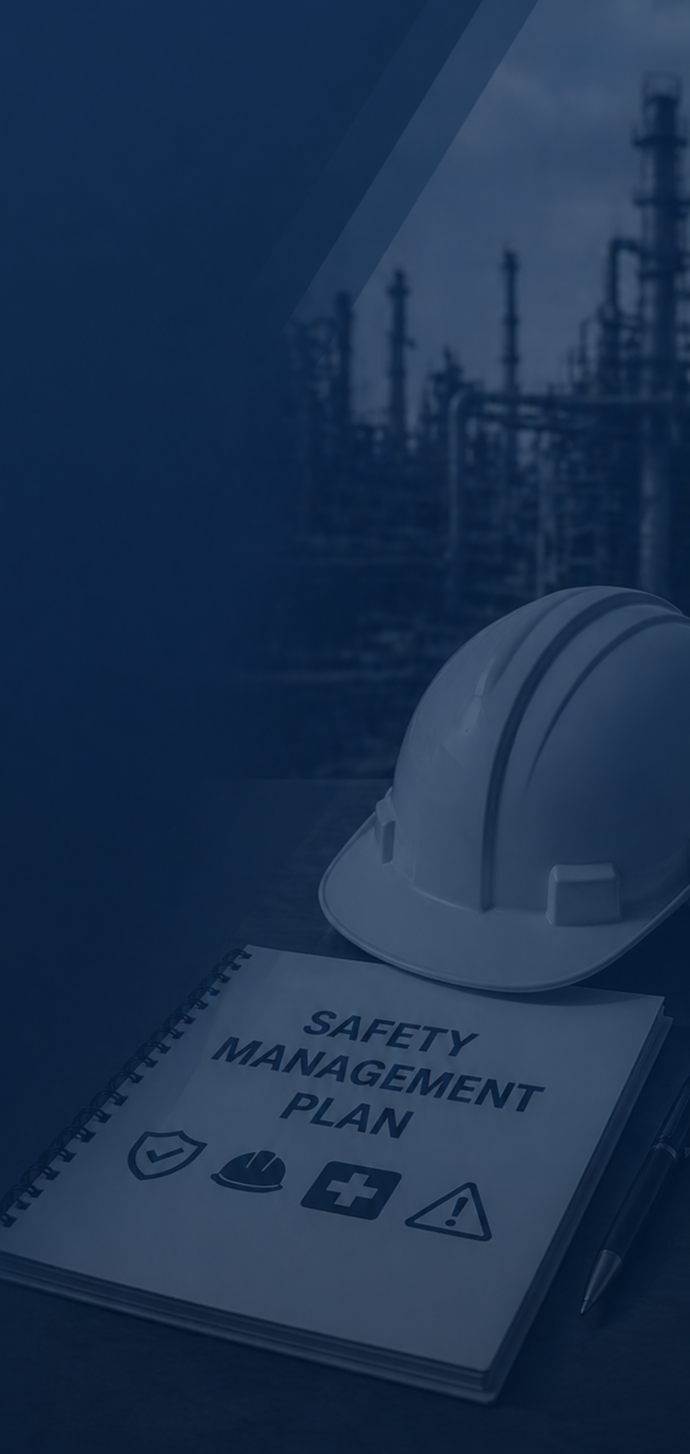
Safety Management Plans (SMP)
A practical system for running your jobs properly — managing workers, subcontractors, and site safety in a way that meets requirements and keeps everything under control.
When things start to grow
At some point, things start to change.
You take on more work, bring in subcontractors, run multiple jobs, or step into a role where you’re responsible for more than just your own work.
That’s where it shifts — from just getting the job done, to being responsible for how it’s done.
As a PCBU, the expectations are the same whether you’re running one job or ten, whether it’s residential or commercial, and whether you’ve got one worker or a full crew.
Have your workers been inducted properly?
Are subcontractors’ SWMS being reviewed?
Do you have a clear process for managing risks, incidents, and site conditions?
Are you actually set up in a way that meets your obligations?
Most people don’t think about it too much — until something goes wrong.
And when it does, it’s not just about the job anymore — it’s about what was in place, what was expected, and whether you were actually set up to manage it properly.
What this actually involves
A Safety Management Plan isn’t just a document — it’s how you set up and run your jobs.
It pulls everything together — how workers and subcontractors are managed, how site inductions are handled, how risks are identified and controlled, how incidents are reported, and how everything is documented.
For some, that’s already in place in different forms. For others, it’s something that’s been picked up along the way without a clear structure.
Either way, when things start growing, it needs to be consistent, clear, and actually work in practice — not just sit in a folder.
Where things usually fall short
Most setups sit somewhere in between.
You might have SWMS in place, a few templates, some processes you follow, and things that have worked so far — but they’re not always consistent across jobs, crews, or subcontractors.
Things get handled differently depending on the site, who’s running it, or how busy things are. Some parts are done well, others get rushed, skipped, or picked up later.
That’s where problems build quietly — not because nothing is in place, but because it’s not structured, not consistent, and not always aligned with what’s actually required.
When it needs to be set up properly
That’s usually the point where having the right structure in place makes the difference.
We don’t just prepare documents — we help set up and manage the safety side of your jobs in a way that actually works day to day.
That includes structuring how SWMS are prepared and reviewed, how workers and subcontractors are inducted, how risk assessments are handled when things change, and making sure everything lines up with what’s expected on site.
For some, that means setting it up properly from the start. For others, it’s stepping in to fix what’s already there and keep things running consistently across jobs.
You stay in control of your work — we just make sure the safety and compliance side is handled properly, so you’re not chasing it, guessing it, or fixing it after the fact.
Not sure where you stand with it?
Most people aren’t — especially once things start growing and getting busier.
We can take a quick look at how you’re currently set up and point you in the right direction — whether that’s putting a proper plan in place, tightening up what you’ve got, or stepping in to manage it moving forward.
No pressure — just a practical conversation to get you moving.