
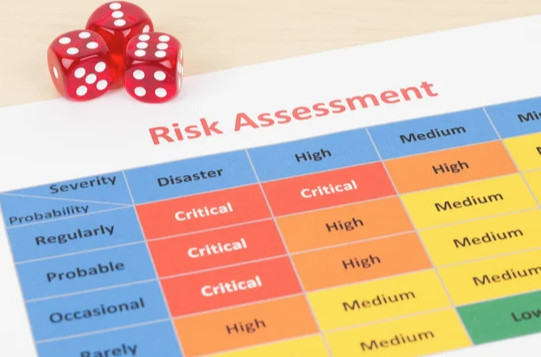
Construction Risk Assessments
For one-off tasks, changed site conditions, and situations where your SWMS doesn’t quite cover what’s happening on site.
Risk assessments usually come up when something changes on site — a one-off task, a different approach, or a condition you didn’t plan for.
Sometimes it’s a quick situation that just needs to be captured so the job can keep moving. Other times, it’s something that needs a proper look before work continues.
Knowing which is which — and making sure it’s handled properly — is where things start to matter.
Quick situations — keep things moving
For a lot of jobs, a risk assessment is used to deal with something on the spot — a change in conditions, a one-off task, or something that just needs to be documented so work can continue.
In those cases, having a simple structure ready to go makes it easier to capture the risk, show what controls are in place, and keep things moving without overcomplicating it.
You can download a risk assessment template and keep it on hand so you’ve always got something ready when these situations come up.
Just make sure it reflects what’s actually happening on site and how the risk is being managed — not just something written down to get through the moment.
If you get stuck or just want a second set of eyes on it, give us a shout — happy to help.
When it needs a proper look
When your SWMS doesn’t quite cover it
Most of the time, your SWMS and a quick risk assessment will get you through.
But every now and then, something comes up that doesn’t quite fit — a different method, changed site conditions, access that wasn’t planned for, or a task that sits outside what was originally allowed for.
That’s usually when people start searching — because they’re not sure if what they’re about to do is covered, or how to document it properly without creating a bigger issue.
At that point, it’s not about filling in a form. It’s about understanding what the risk actually is, how it should be controlled, and how it ties back into your responsibilities as a PCBU and what the builder is relying on.
That’s where we step in — to help structure it properly so it reflects what’s actually happening on site, stands up if it’s ever questioned, and doesn’t leave gaps that come back on you later.
Not sure if it’s something quick or something that needs a closer look?
That’s usually the hardest part to judge — and getting it wrong can either slow the job down or leave gaps you don’t see until later.
We can quickly look at what you’re dealing with and point you in the right direction — whether that’s using a template, adjusting what you’ve got, or structuring it properly from the start.
No pressure — just a practical conversation to get you moving.